
Facilities
Caging
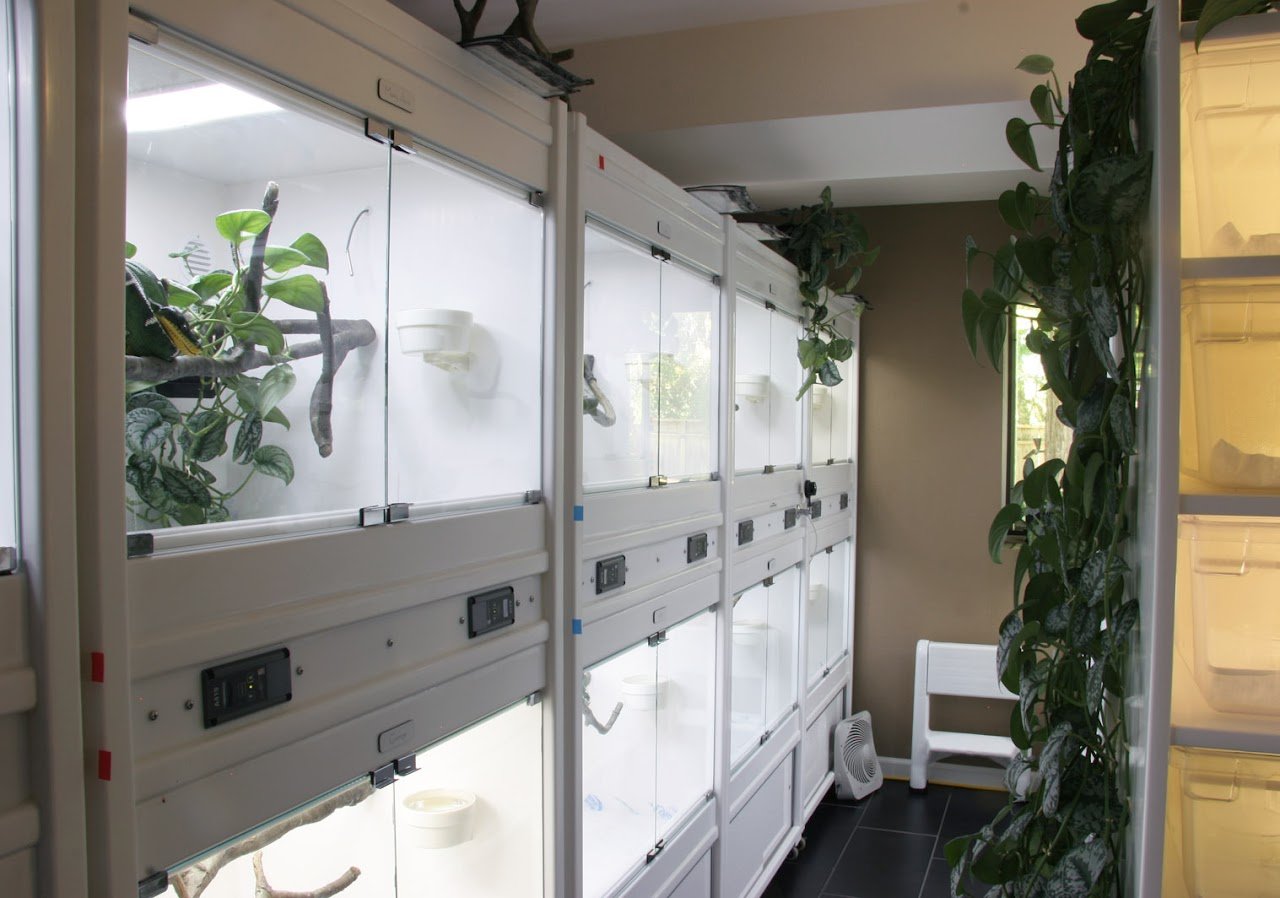
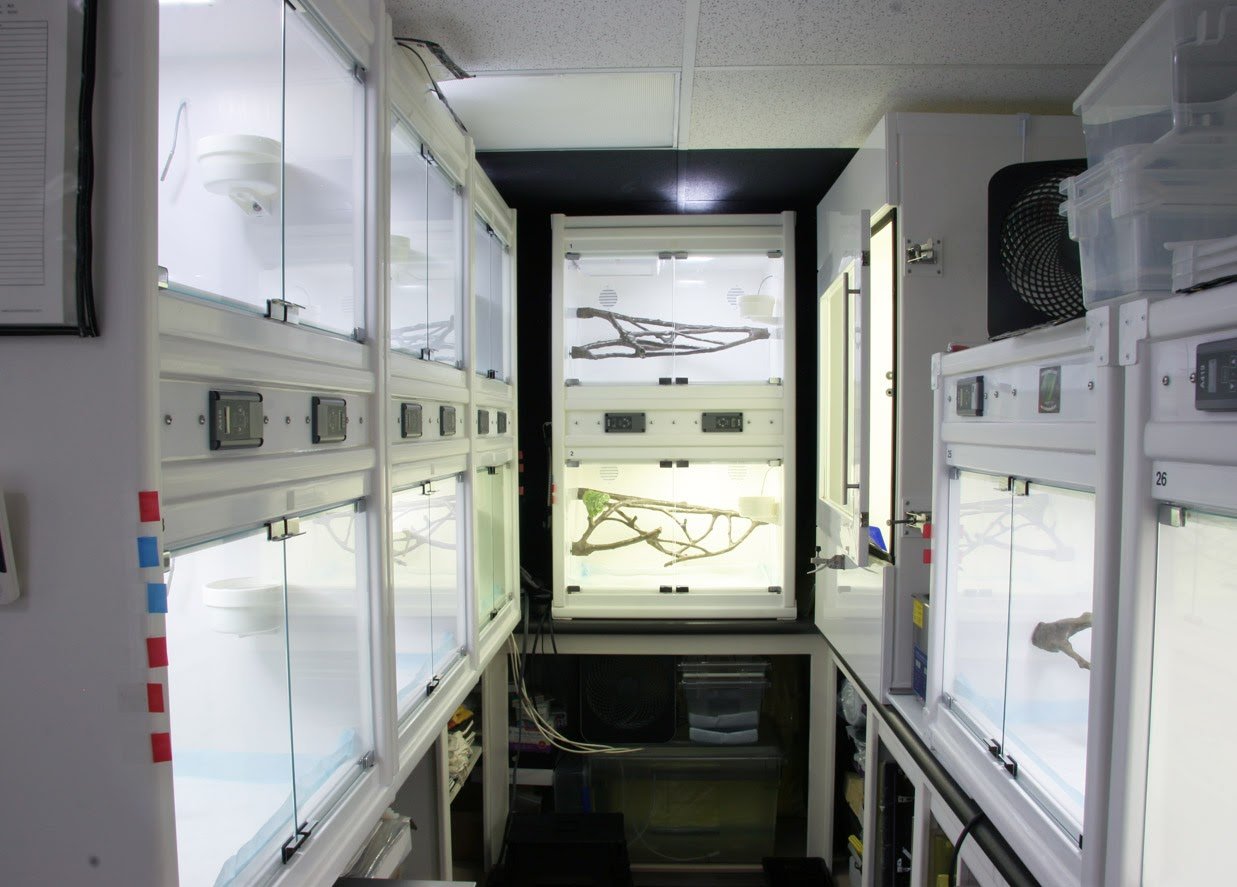
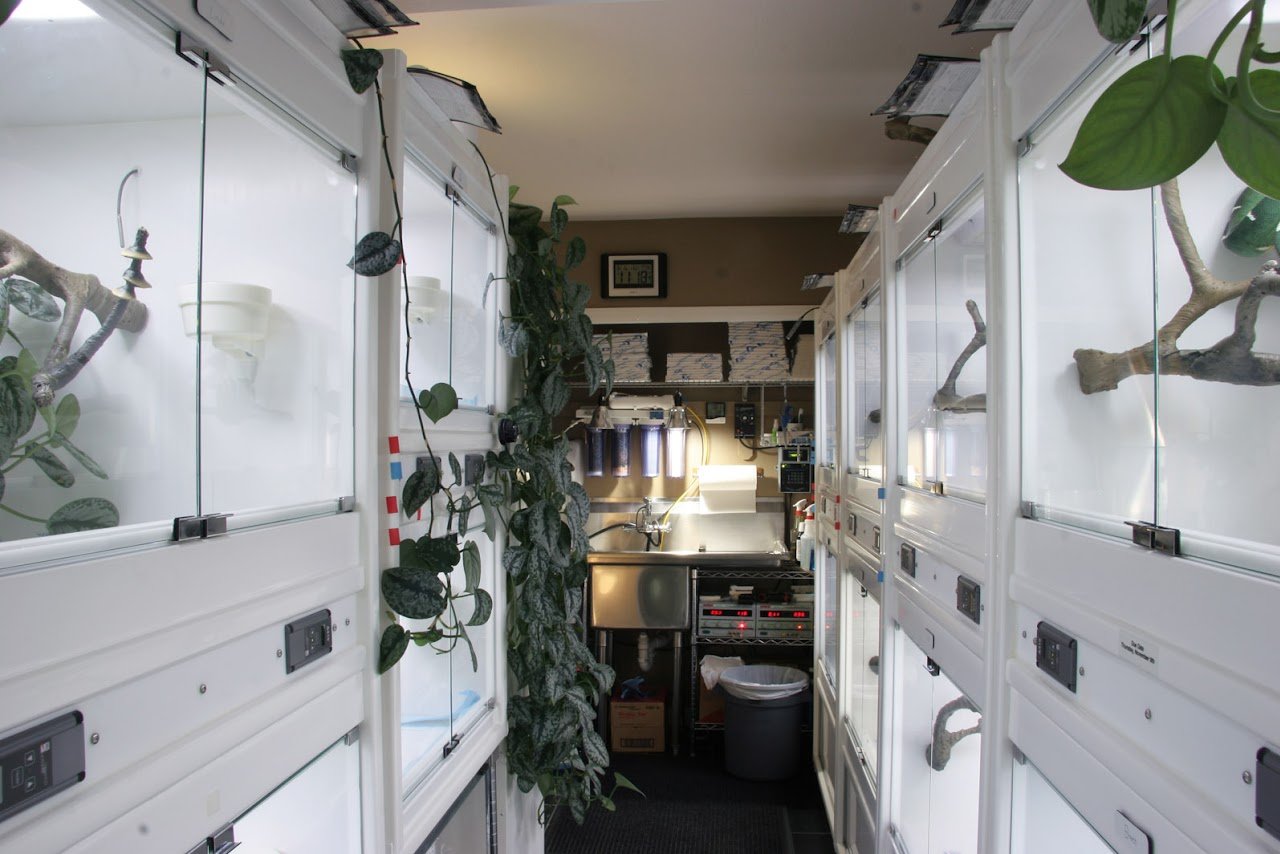
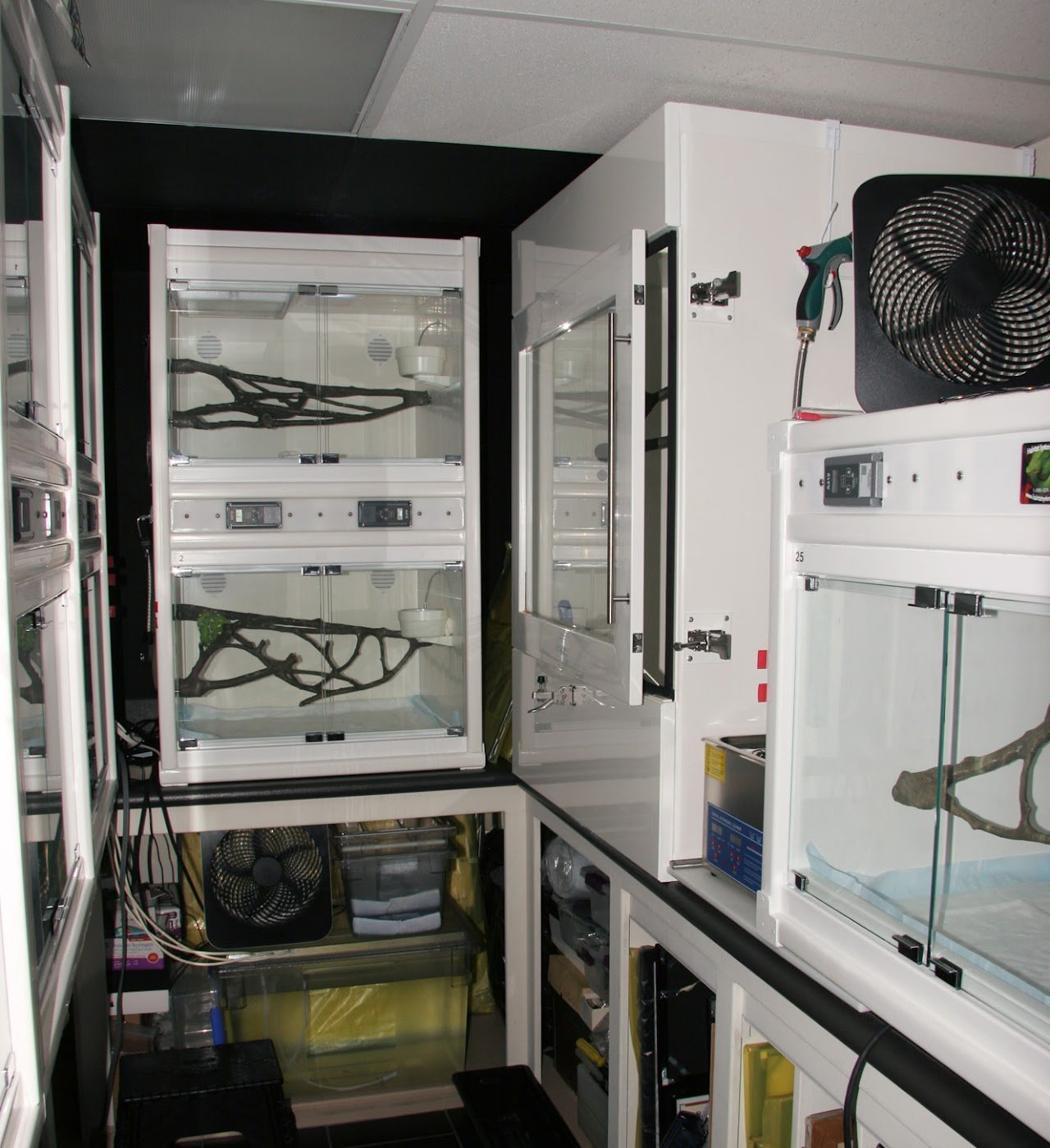
Our Habitat Systems environments were built to our specifications and represent the culmination of everything that we have learned over the years in raising and reproducing Amazon Basin Emerald Tree Boas.
-
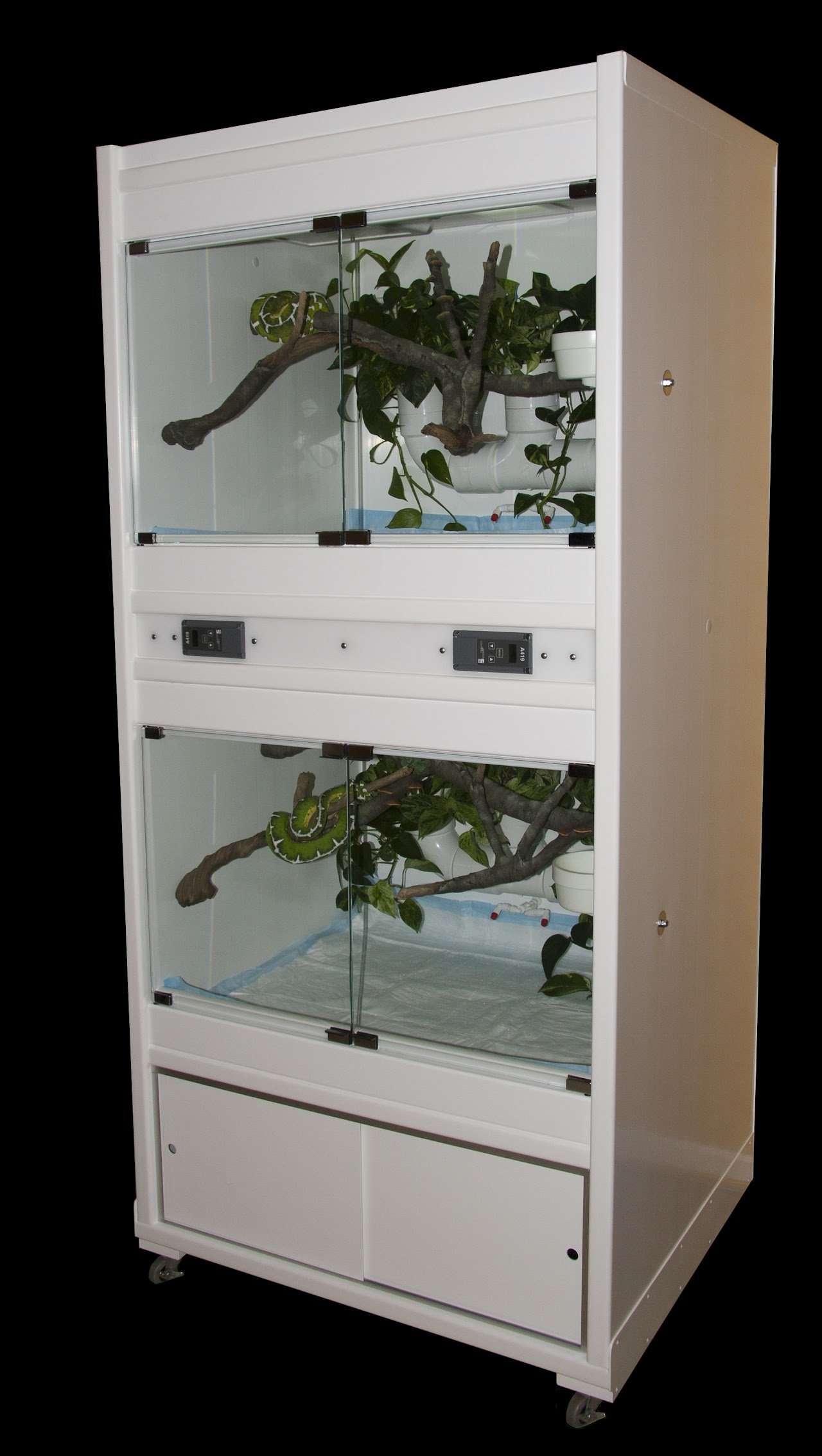
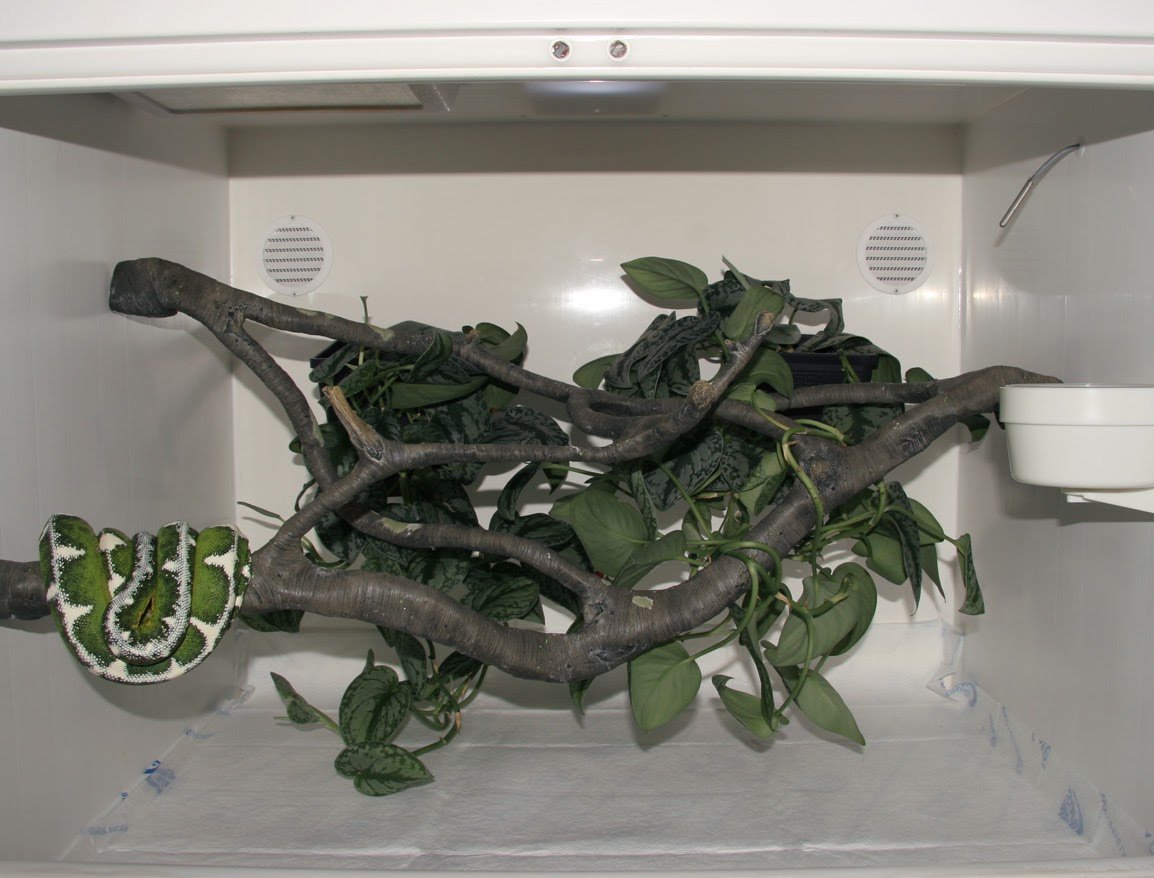
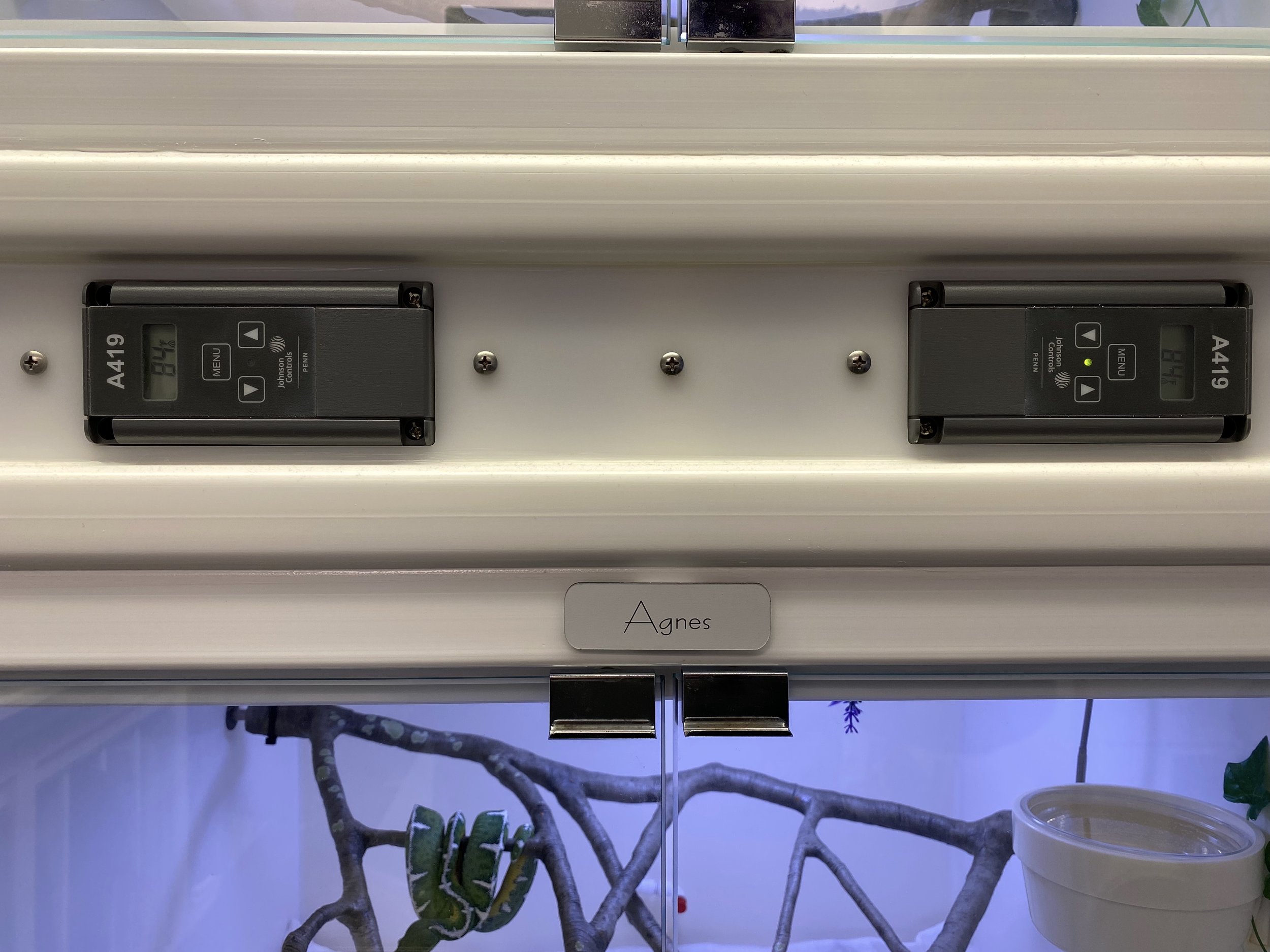
Each environment is 36 inches wide by 28 inches deep and 80 inches high. The control electronics and water reservoir are housed in the base of the unit. Each environment contains two cages. The tempered glass doors are secured by magnetic latches. The lift-out natural looking, epoxy resin sculptured perches are created by Ron Rundo of InsertsWork. Each cage has a 40 watt heat panel mounted on the left side of the cage ceiling which creates a substantial temperature gradient for the snake. Lighting is provided by LED panels with a color temperature of 6500K. The LED light source is mounted above a translucent Plexiglas panel. Easy twist out removable water bowls are mounted high for easy snake access while reducing the risk of gravid females delivering newborns into the bowl. The cages are constructed out of extruded hollow core PVC. Temperature control is maintained by Johnson Control thermostats.
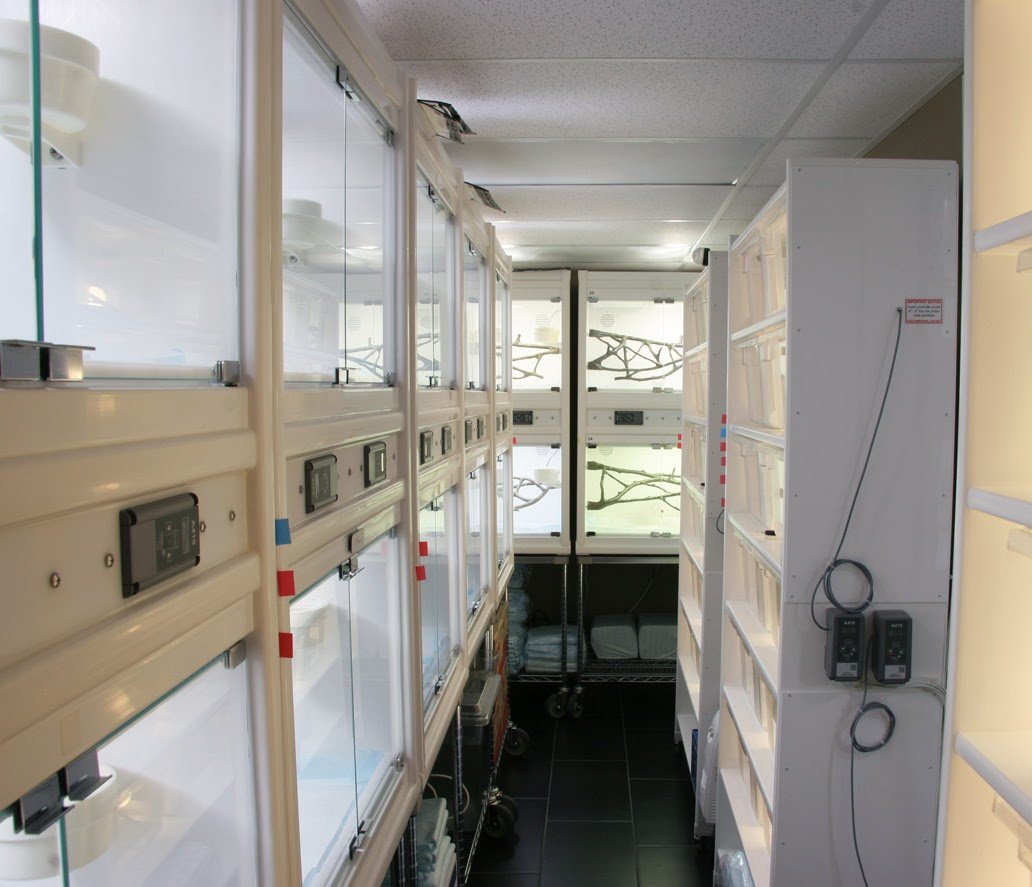
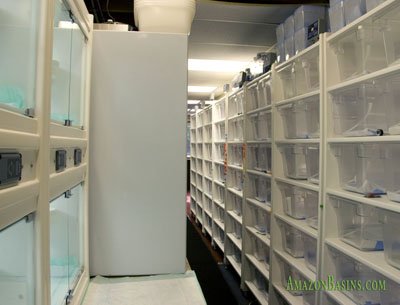
Our rack systems were also built by Habitat Systems to our specifications. Heat tape is embedded on one side of the bottom of the racks to create a heat gradient. Dimmable LED strips with a color temperature of 5000K are mounted on the inside back wall of the racks and are on a 12 hour light cycle. Temperature is controlled by a Helix thermostat. The racks are built out of extruded hollow core PVC.
Temperature Control
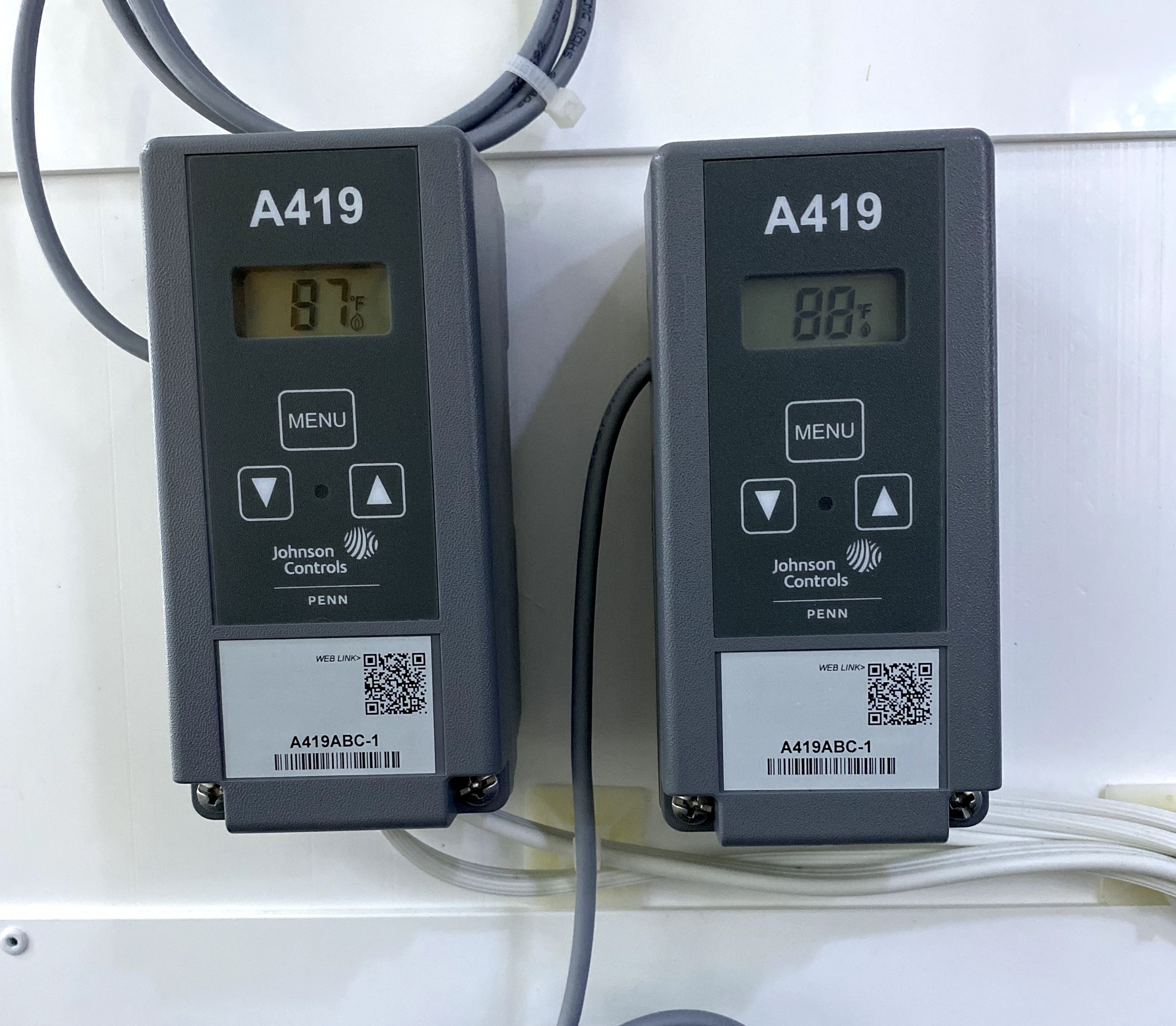
Each cage has a 40 watt heat panel mounted on the left side of the cage ceiling which creates a substantial temperature gradient for the snake. We use Johnson Control thermostats to maintain our daytime and nighttime temperatures. The thermostats sample ambient temperature from the opposite side of the cage from the heat panel.
-
Our adult breeding environments are 36 inches wide by 28 inches deep and 80 inches high. The control electronics and water reservoir are housed in the base of the unit. Depending on the time of the year, our daytime highs range from 84 degrees F to 88 degrees F. Nighttime lows range from 72 degrees F to 76 degrees F. We maintain a 12 degree drop from daytime highs to nighttime lows. Basking temperatures under the heat panel can be as high as 93 degrees F. The temperature differential between the side of the cage under the heat panel to the cool side of the cage is approximately 12 degrees F.
Our rack systems were built by Habitat Systems to our specifications. Heat tape is embedded on one side of the bottom of the racks to create a heat gradient.
Perch System
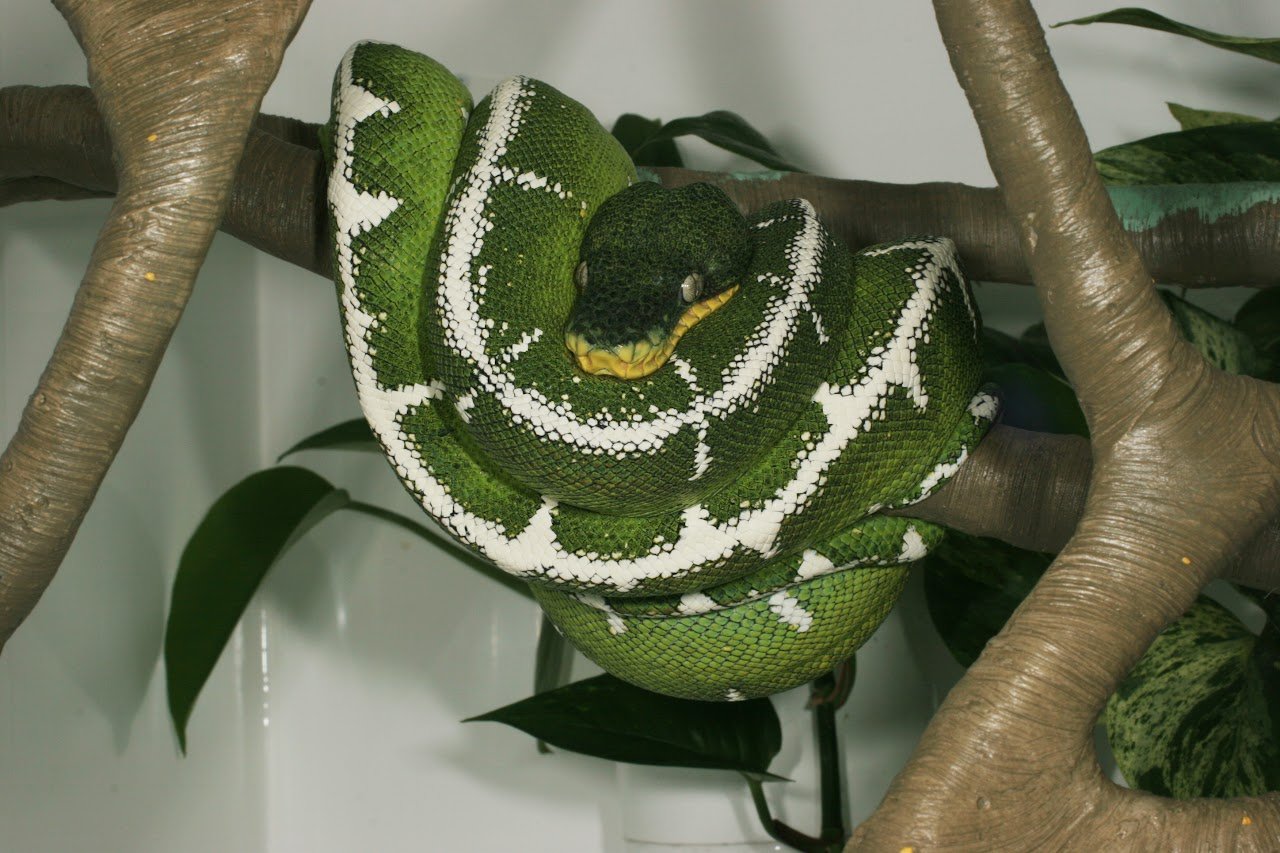
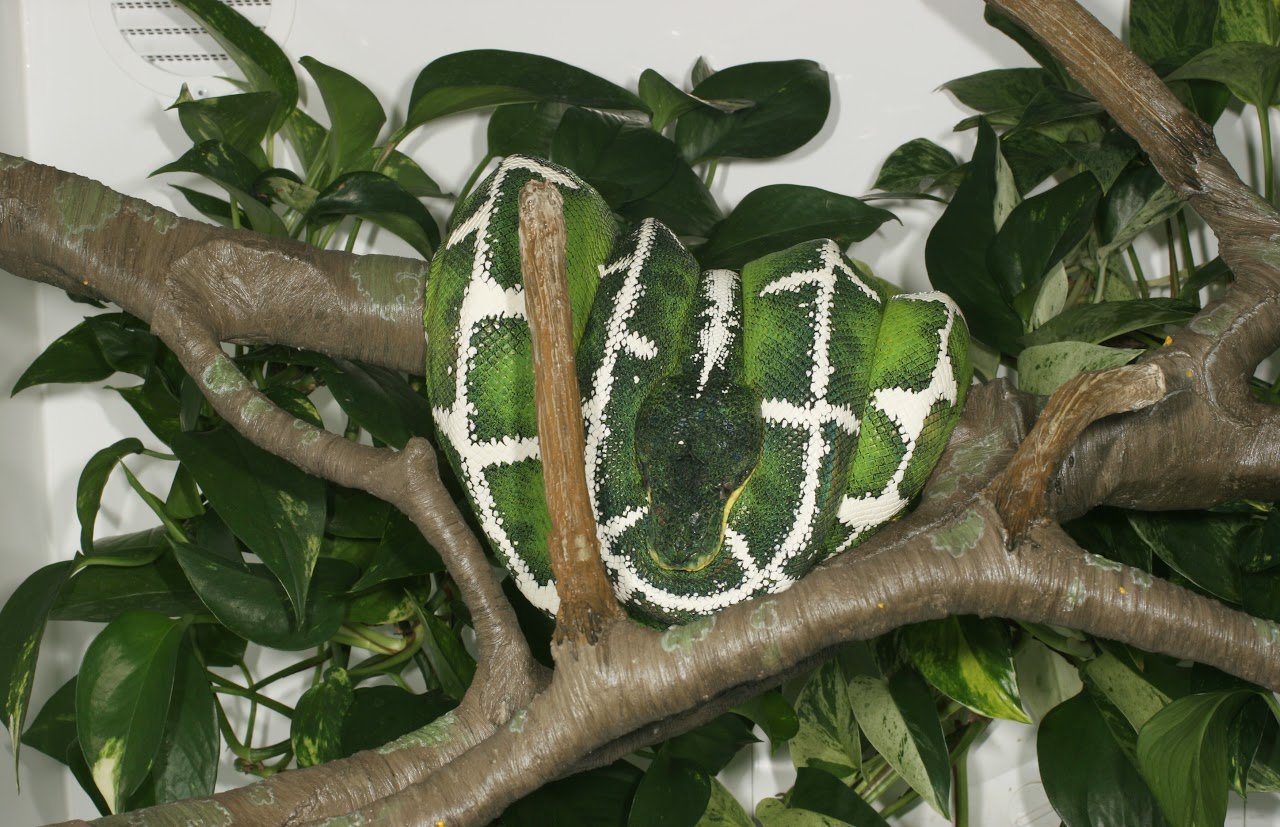
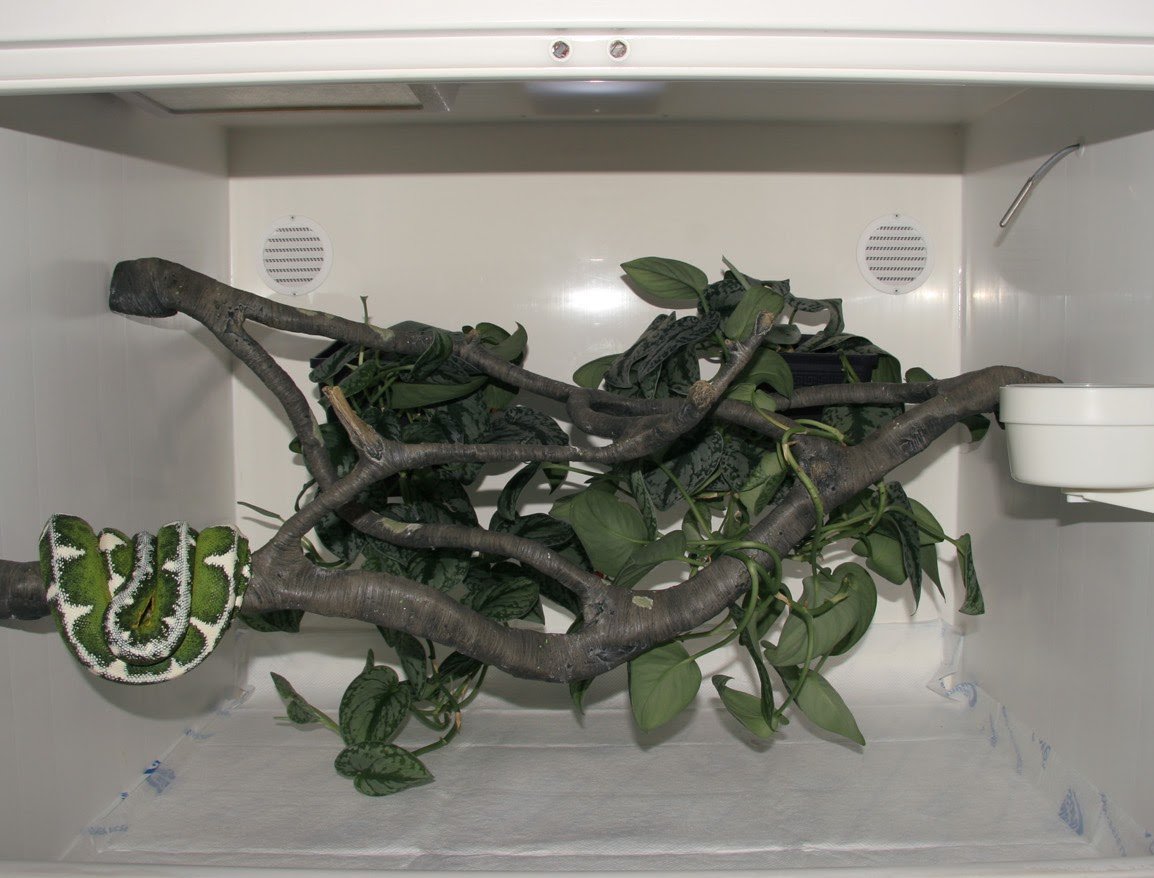
Our adult and sub-adult cages use epoxy resin sculpted perches from Ron Rundo of InsertsWork. The perches are hand made and painted with acrylic paint and then coated with semi-gloss polyurethane for durability. The perches use a pin system that allows them to simply lift out making the removal of an animal quite easy.
-
Even though each perch is unique in design, they all use a universal pin system such that every perch can fit into any cage. The pin pattern is replicated in our Rain Chambers so that a perch can be easily lifted out of the cage and placed in the Rain Chamber without having to remove the snake.
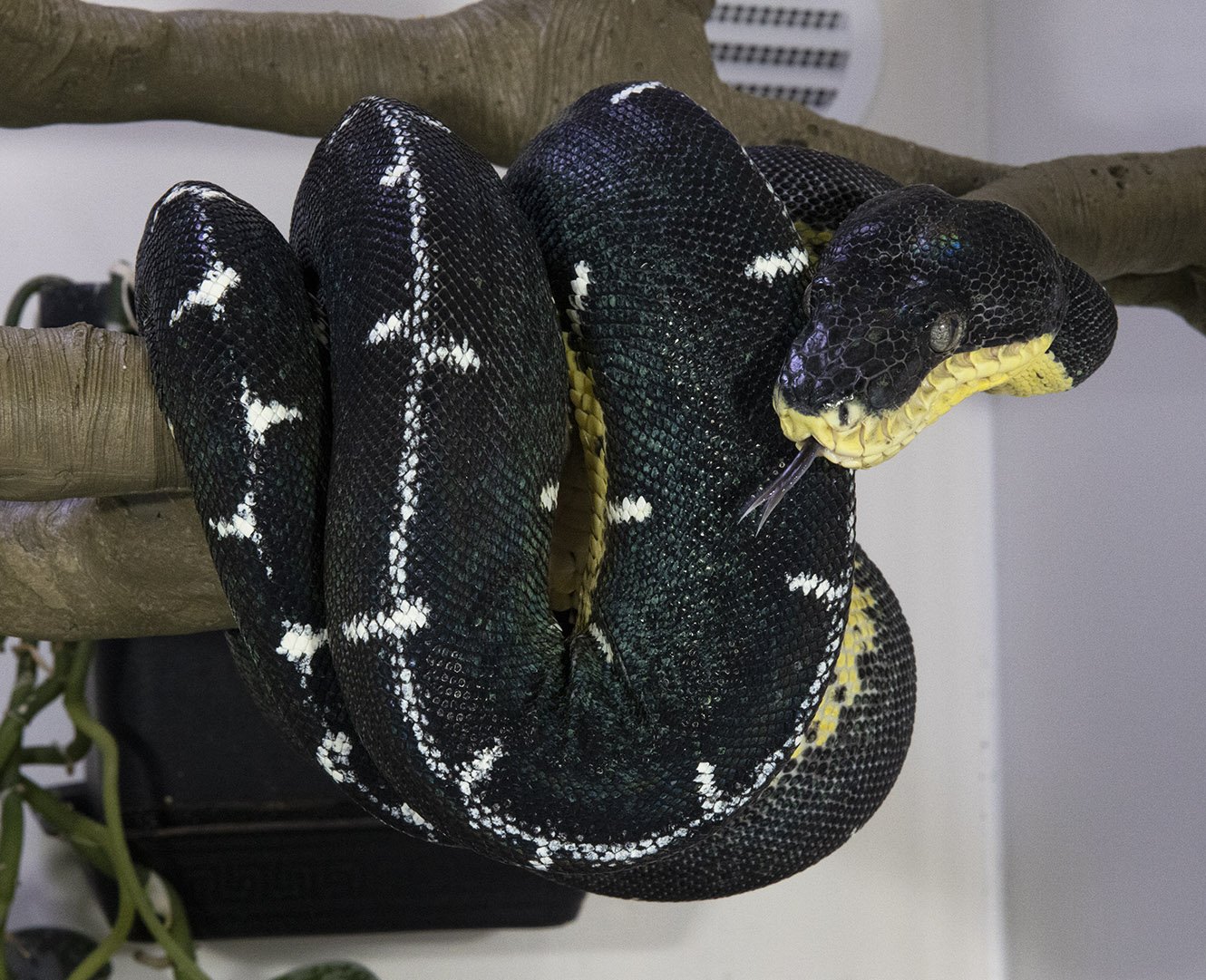
As the Basin matures, we try to maintain a perch diameter equal to less than half the girth of the animal. Not providing thin enough diameter perches can result in tail damage as the snake matures. To avoid corrosion due to high humidity, all fastening hardware such as screws used in the cage interior are either stainless steel or nylon depending on structural requirements.
Water & Misting System
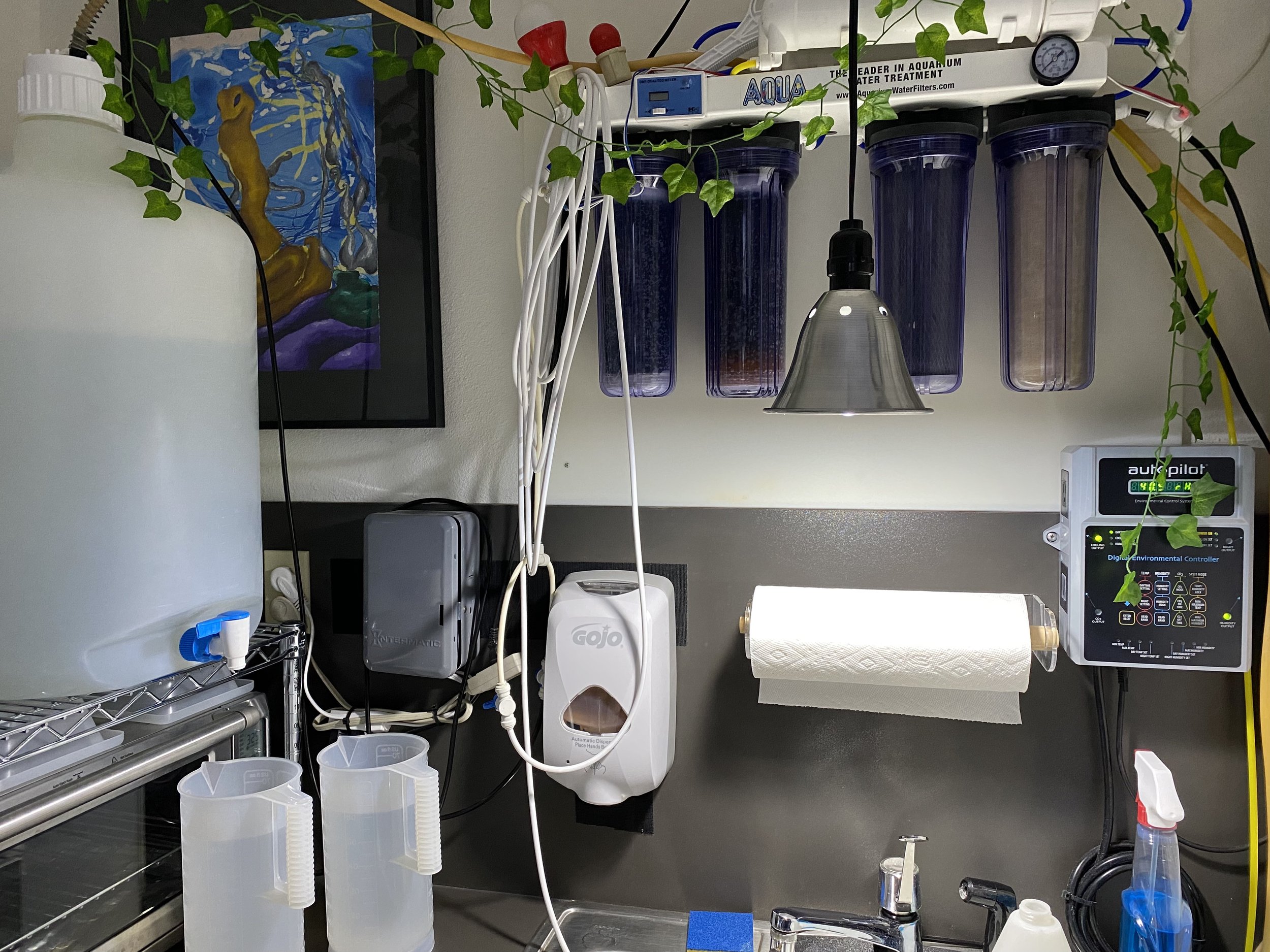
Living in Colorado presents quite a challenge in maintaining humidity in our Basin cages. The typical year round humidity in our snake rooms ranges from 60 to 70 percent. The humidity range we need to maintain for the Basins is in the 60 to 80 percent range. Consequently, we designed a misting system using misting heads from Kimist, programmable digital timers from Intermedic with multiple zones and pumps from Pro-Products and Reptile Basics.
-
We generally mist the substrate (not the animals) once a day for 1 minute at 8:00 AM when the lights come on and the Basins start (actually end) their day. Each cage has its own digital hygrometer/thermometer for visually checking the humidity level and double checking the temperature against the Johnson Controls thermostat readout. We use a range of Kimist nozzles that are tuned to the individual cage. Some cages require a higher flow (gpm) nozzle to maintain humidity in the desired range.
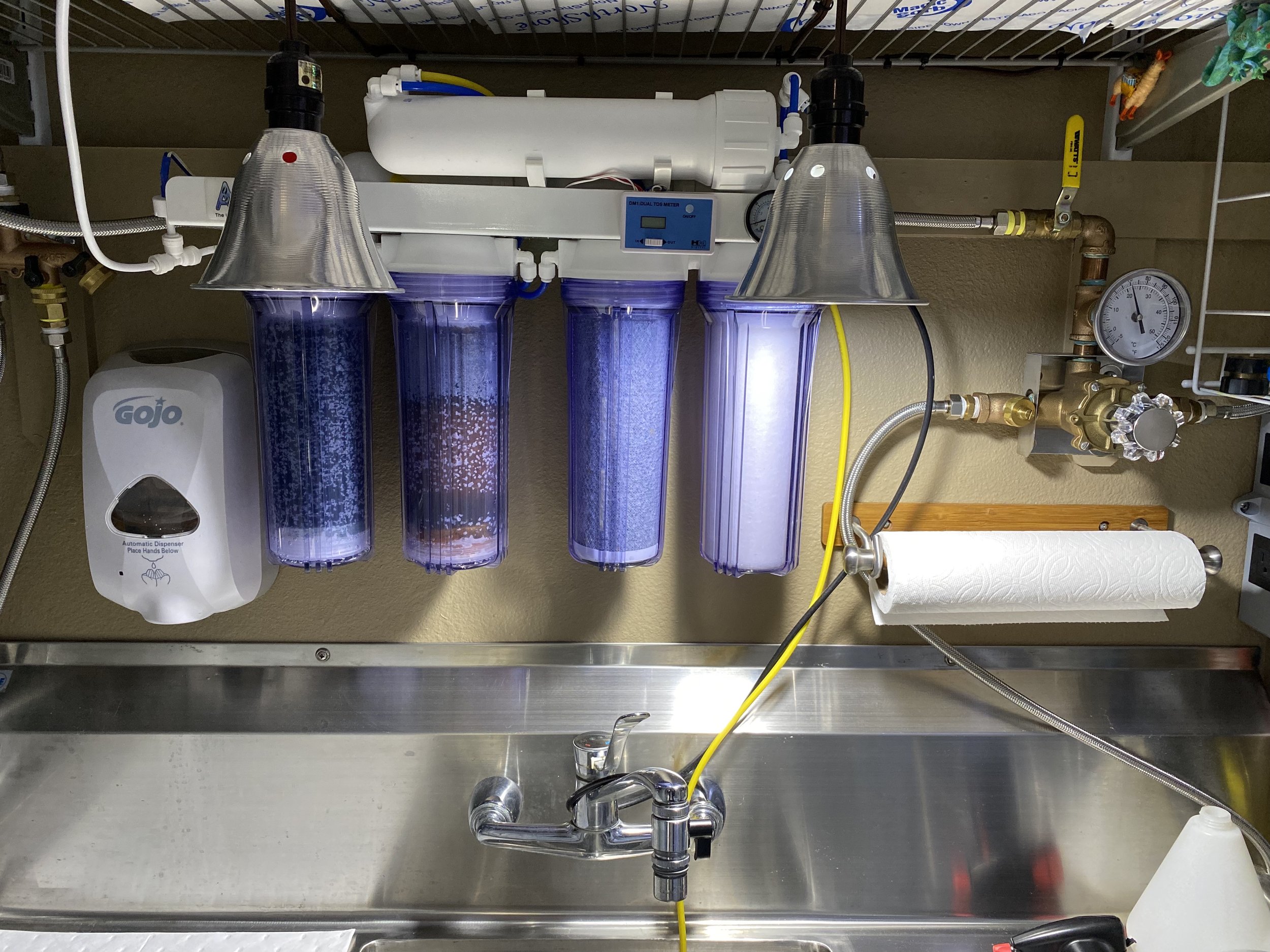
In order for the misting system to perform consistently over time, we use a reverse osmosis system to filter out any minerals or particulates in the water. Removing the minerals and particulate matter through reverse osmosis prevents the nozzles from becoming clogged and will provide several years of maintenance free operation.
Humidity is maintained in the cages through constant evaporation from the water absorbed during the misting of the disposable underpads used on the cage floor as a substrate. The disposable pads should be changed approximately twice a month or whenever any signs of soiling are present.
The Rain Chamber
Some collectors live in climate zones such as Florida that are suitable for taking their animals outside and allowing exercise on specially built "jungle gyms". Frequently these collectors will "rain" on these animals with a hose which often stimulates the Basin to defecate. Living in Colorado, we do not have this luxury and therefore have developed a device we call the "Rain Chamber".
-
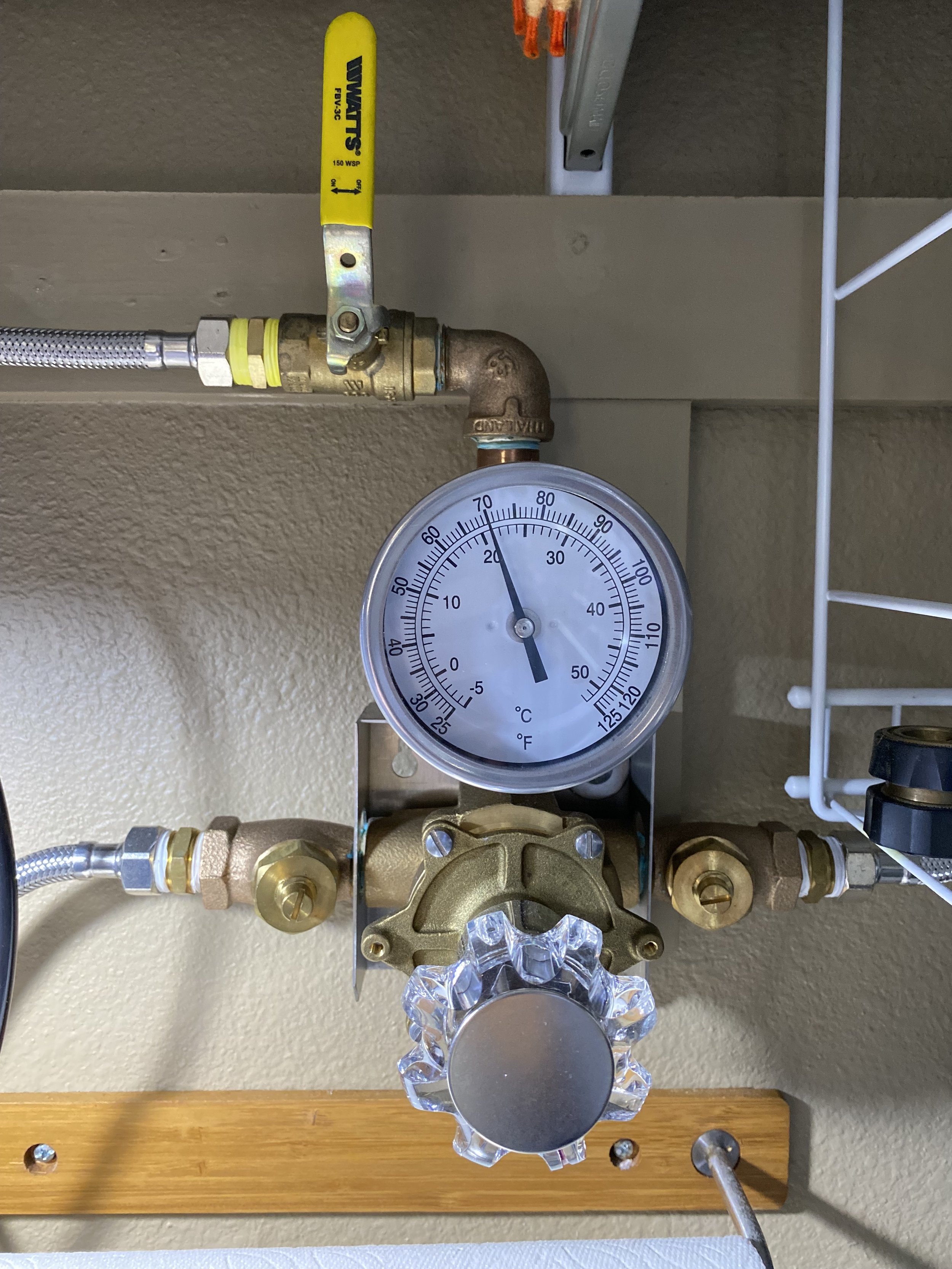
The Rain Chamber is a water tight enclosure made of white welded polypropylene with a series of removable perches and a temperature controlled misting system. Our chamber is 48 inches tall, 48 inches wide and 28 inches deep. The Rain Chamber is an essential tool for maintaining the general health of our Basins. Through the use of this device, we can routinely exercise our Basins and essentially schedule their bowel movements. Rain Chamber sessions last between 10 and 30 minutes. The water temperature is constant at 90 degrees.
Rain Chamber use is helpful when you have an animal that needs to defecate or is having shedding or hydration issues. We also place females in the rain chamber after they deliver babies to induce the female to expel any remaining afterbirth.
Cage Floor Substrate
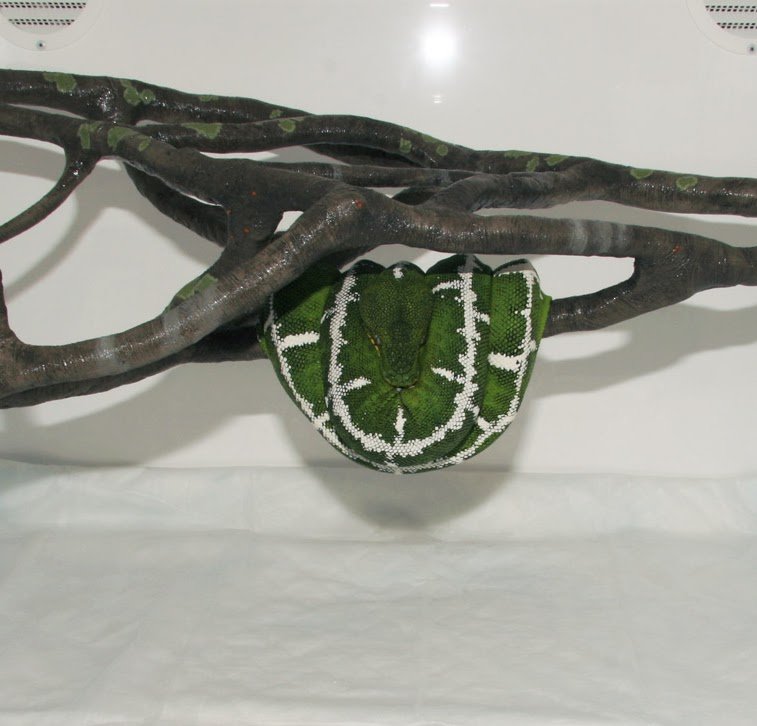
From our experience, Basins periodically like to rest or crawl on the cage floor. As such, filling the bottom of the cage with water can be quite restrictive for your animals. We have found that using disposable underpads is a good solution for providing a suitable substrate for holding moisture from the misting system in order to maintain humidity and for providing a surface for your animals to occasionally crawl on, rest on or give birth on. The pads fit the bottom of the cage perfectly and seem to be resistant to mold. The pads need to be changed every few weeks depending on how quickly they become soiled.
Network Cameras
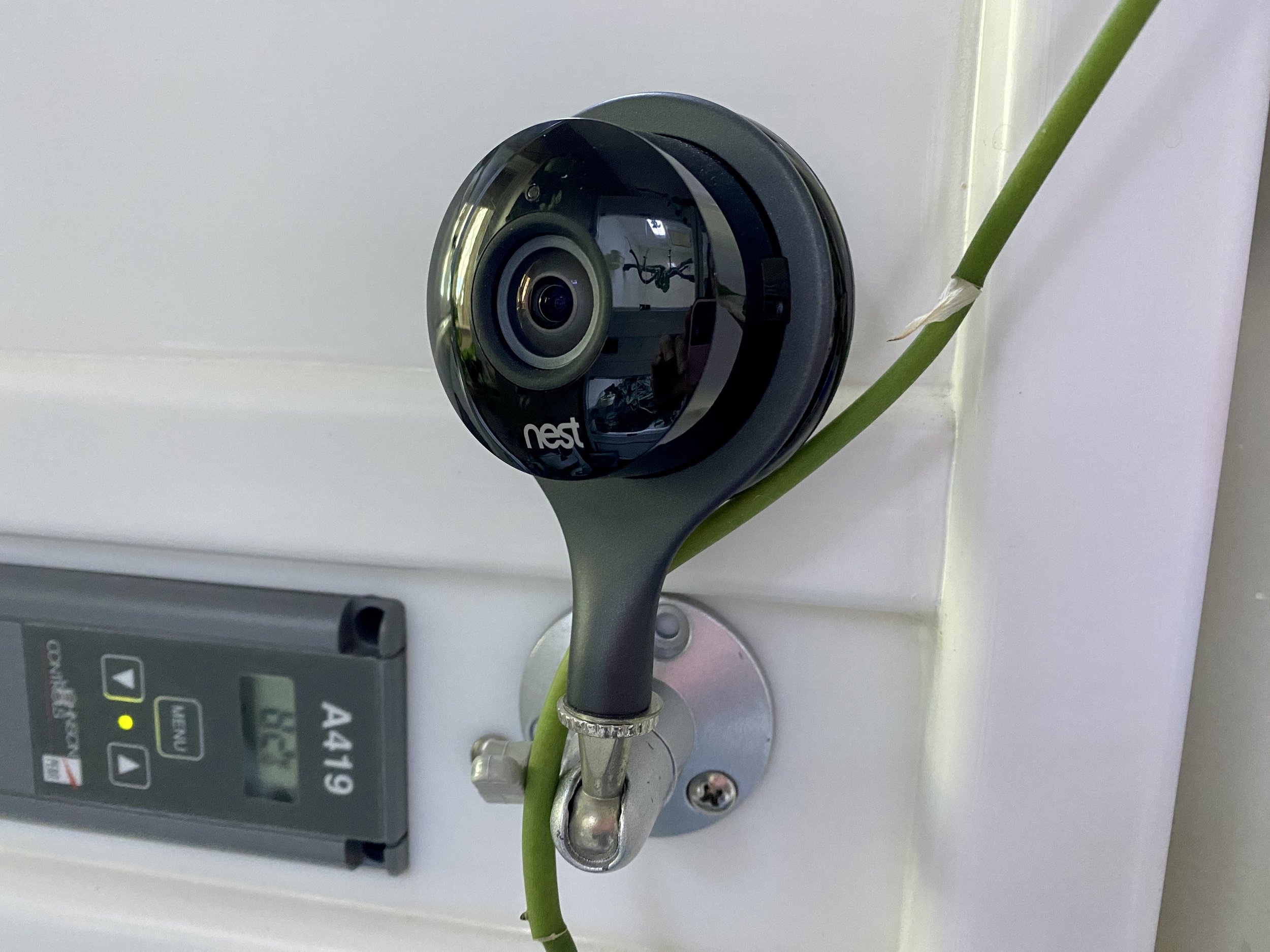
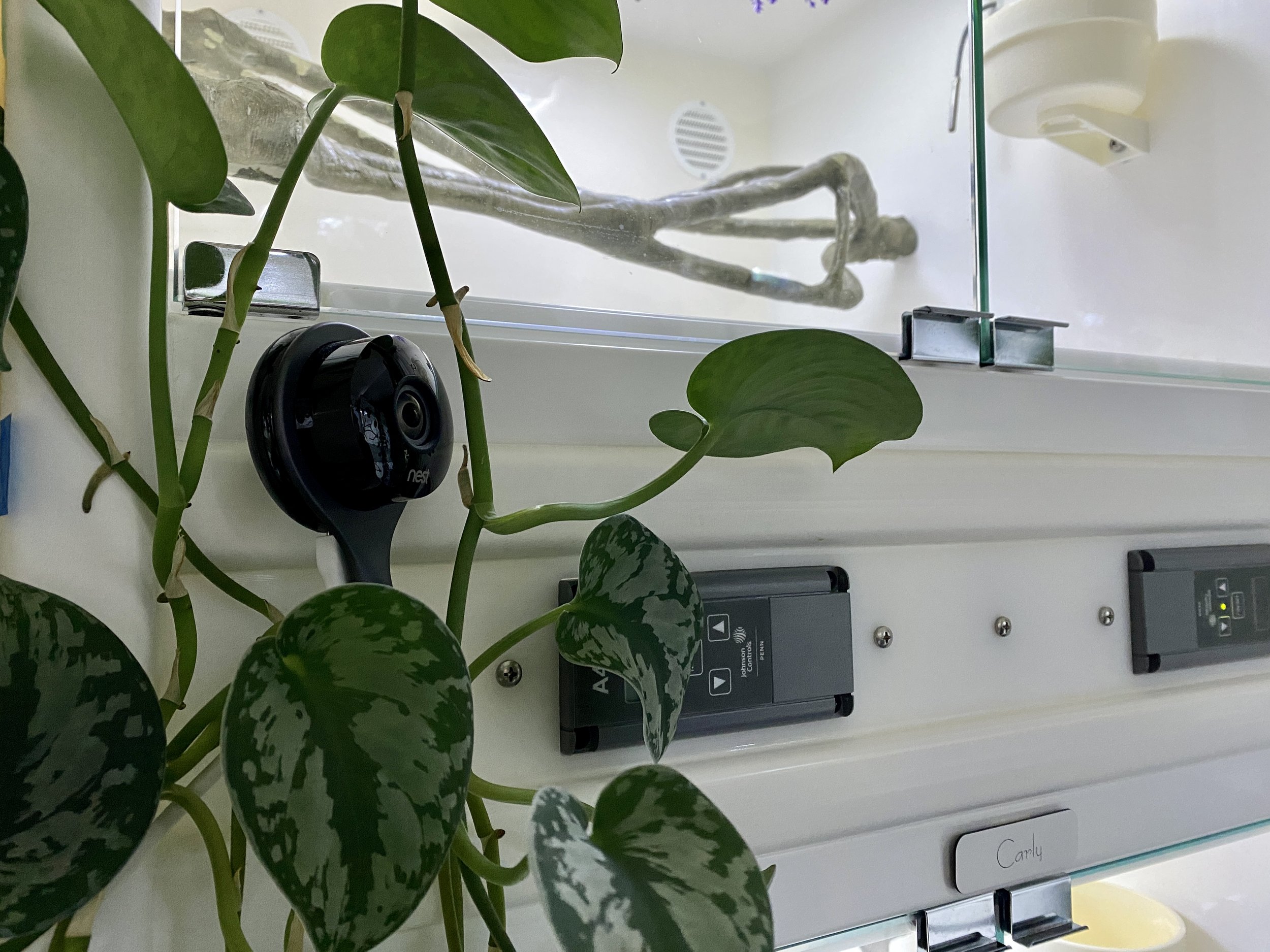
In order to observe our animals remotely without disturbing them, we use Nest network cameras.
These cameras also have an infrared mode in which our Basins can be observed, filmed or photographed while in complete darkness.
Our set up allows for camera control and observation from anywhere in the world through Internet or Smartphone access.